




















|
|
 |

Distance Learning Texts
Books for distance learning courses at Vermont Law School. Click on course for textbook information.
|
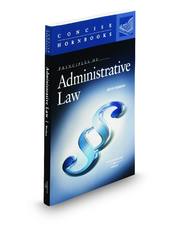
Administrative Law
The goal of Administrative Law is to provide students with a working knowledge of the general principles of administrative law, a general knowledge of the workings of bureaucratic institutions, and an understanding of the critiques of government. |
|
|
|
Alternative Fuels & Renewable Energy
Students in this course will explore the emerging field of renewable and alternative energy supplies. With an eye toward the impacts of climate change on both natural systems and the possible interference climate change may wreck on current energy production, the course considers emerging distributed generation models, surveys the range of emerging energy technologies and fuels, and examines the local, state and federal laws and policies that govern transition to alternative fuels and other renewable energy sources. |
|
|
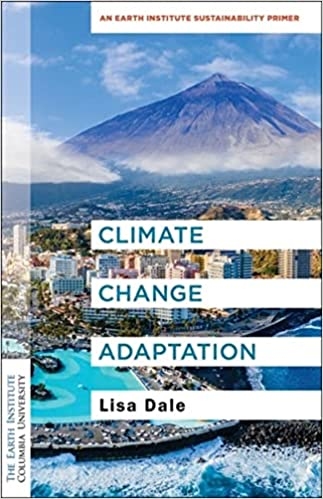
CLIMATE CHANGE ADAPTATION
Climate Change Adaptation in Human Systems Impacts of climate change on human systems - infrastructure, property, and possessions - poses both a challenge to law, and an illustration of how the law and legal institutions evolve in response to major social changes. |
|
|
|
Climate Change, Extinction and Adaptation
In this course, students examine the ecological, social and ethical consequences of climate change impacts on the natural world. After reviewing climate change disruption's potential to invoke significant habitat modification and biological impoverishment, students consider various legal and policy options to address both the phenomenon of climate change and its effects. |
|
|
CLI9440 EXTERNSHIP
MELP Externships are designed to give students first-hand field experience in the environmental area. The best experiences integrate legal, scientific, policy, and ethical issues. Non-profit groups; international, federal, state and local government agencies; law firms, and consulting firms are among the many organizations from all over the world to sponsor MELP externships.
|
|
|
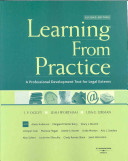
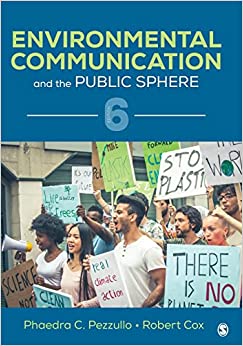
Communications, Advocacy & Leadership
A successful environmental professional needs to possess the ability to advocate, counsel, investigate, persuade, research, and educate. This course will develop those skills through various writing and oral advocacy projects. The class will focus extensively on the craft of writing well. |
|
|
|
Energy Law & Policy
The energy industry is both a key to the life that billions seek and America's most significant source of pollution. Environmental problems are the energy industry's most important constraint. This course examines key issues in American energy policy, and searches for ways to resolve or ease the strains, which that policy puts upon environmental sustainability. issues of social justice in siting projects and meeting—or limiting—energy demand, the statutory schemes underlying traditional regulation, and an introduction to wholesale electric markets. |
|
|
|
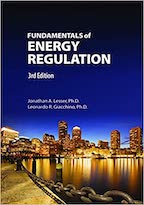
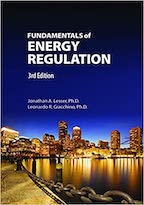
Energy Regulation & The Environment
Builds on the course Energy Law & Policy in a Carbon-Constrained World by exposing students to the legal, economic and structural issues involved in energy regulation and energy markets focusing on electricity. |
|
|
|
Environmental Dispute Resolution
This course explores the characteristics of environmental disputes, examines alternative dispute resolution processes (including mediation, arbitration, negotiated rulemaking, and facilitation), and assesses relevant policy and practical considerations in selecting the most effective method of resolving environmental disputes. This course will use simulations to explore a range of dispute resolution processes and the role of impartial third parties and lawyers in these processes. The instructor will use numerous case studies and extensive experience as an environmental mediator and facilitator. |
|
|
Environmental Law
This course is an introduction to the law of pollution control, management of hazardous materials, and preservation of natural resources, with a particular emphasis on major federal environmental statutes, including the National Environmental Policy Act, Clean Water Act, Clean Air Act, and Superfund. |
|
|
|
LMM Seminar
This seminar ranges widely over environmental law and policy, exploring diverse advanced topics and viewpoints. On most weeks, a guest speaker will present his or her scholarship to the seminar. These guests will include off-campus visitors and VLS faculty and advanced students. These guests will bring cutting-edge scholarship and ideas to the seminar, sparking vigorous discussion of the leading environmental law and policy issues of our day. |
|
|
Natural Resources Law
One third of the nation's land base belongs to the American public and is managed by the United States Forest Service and agencies of the Department of the Interior. Through this course students will examine the statutes and regulations governing the management of the federal lands and their resources. |
|
|
|
Oil and Gas Development
This course reviews oil and gas regulation, both up and down stream, in the United States and around the world. With an eye toward the hot issue of the day – Fracking, the proposed natural gas pipeline through, Middle East oil reserves and trade, and so forth – this course gives students a clearer understanding of the legal regime that makes the oil and gas exploration, extraction, refining, distribution and sale markets work around the world. |
|
|
Public Law
This course introduces the fields of legal analysis, research, and writing through the study of environmental statutes and case law. It also explores research and investigatory techniques, citation form, legal reasoning, writing skills, and professionalism. |
|
|
Science for Environmental Law
This is an integrative science that can provide insight into many contemporary environmental problems. Through visits to a variety of field sites in central Vermont, readings, and lectures, this course will explore the principles of ecology using a hands-on, interdisciplinary approach. |
|
|
|
 |
 |